Infiniteyay on Collectors, Challenges and AI as a Tool
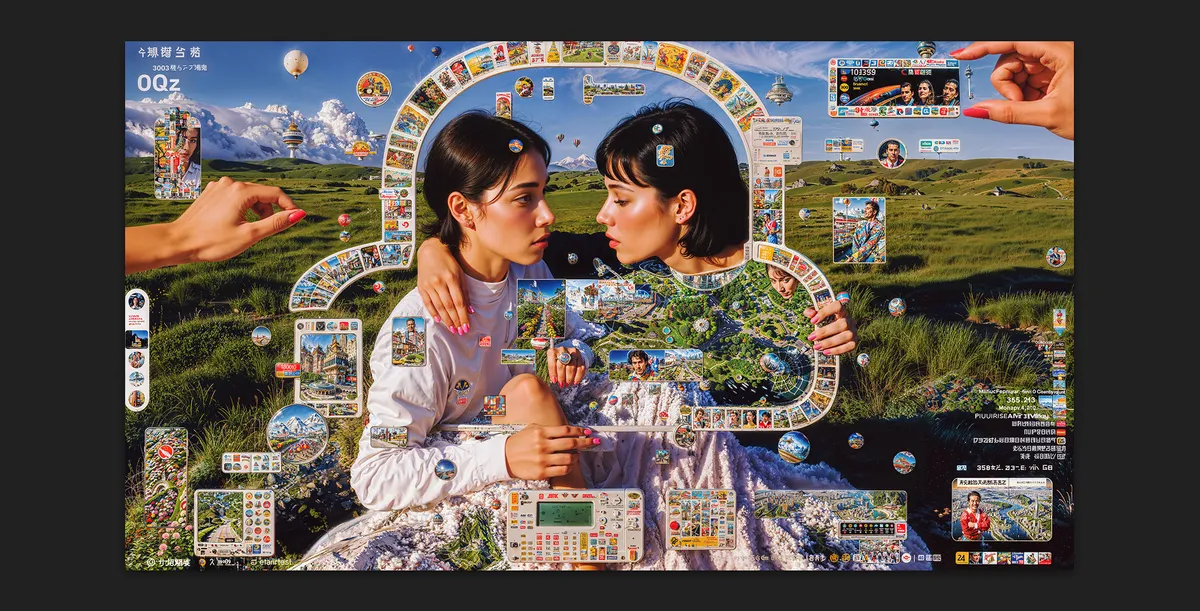
At Least We Have Each Other listed on Manifold Gallery
Check out Infiniteyay's catalogue: manifold.xyz/infiniteyay
Manifold: We've been following your work for some time and love what you have published. I'd love to know, how did you get started creating?
Infiniteyay: I've been creating for as long as I can remember. As a kid, I was always drawing, making home movies with an old VHS camera, just constantly making things. Creativity was always around me. My dad worked in the art supply industry, so I had access to materials and inspiration from a young age. Over time, that evolved into doing design and art for friends' bands and small businesses, which led to working with companies and agencies professionally, diving into branding, design, and creative direction.
But life gets so busy. With my career and a family, my personal creativity started to take a backseat. I still dabbled, mostly music and the occasional sketch or digital collage, but it wasn’t until I discovered AI art in 2022 that I truly reignited that spark. When I started using image generation tools and saw how the outputs resonated with the ideas in my head, it felt like magic.
Manifold: What was your introduction to creating with AI?
Infiniteyay: It began with Midjourney and Stable Diffusion. I stumbled upon people creating with AI and talks of new image generation tools and I just had to try it out. I joined the Discords early, started playing with the tools, and was instantly hooked by how the images captured whatever I could dream up.
Manifold: What was your introduction to web3?
Infiniteyay: Around 2020, the initial hype around PFP projects didn’t resonate with me. Once I saw AI artists minting work in meaningful ways, it opened my eyes to the creative potential of the space. I discovered a broader art world that wasn’t just about hype and floor prices, it was about artists experimenting, collaborating, and being appreciated for pushing boundaries.
That’s when I started to really pay attention.
On collectors
Manifold: How do I get my first collector? Is a question that comes up alot for artists entering the space. So I'll ask you, who was your first collector?
Infiniteyay: I remember clearly the moment Claire Silver collected my first piece. She had been engaging with my posts and eventually asked, "When are you going to mint something?" I didn’t know how to, but her encouragement gave me the push I needed to put my work out there, and once that first piece sold, it felt like a door opened.
Manifold: Has being on-chain changed how you view your art?
Infiniteyay: Before NFTs, I was creating but not really sharing. I might scan a drawing or post something online, but there was no sustained engagement and I hadn’t found a community. Being on-chain gave my digital art a new context, a way to be valued, discovered, and collected. It created real connections between myself, a community and collectors, people who resonated with the themes and emotion behind the work.
On-chain art doesn't just live in the moment, it lives on.
There's permanence. There's provenance. Even more than that, there's a sense of contribution, I'm now part of a living archive of digital creativity. As a digital artist, it's validating to know that what you're making matters and is a part of something bigger.

Selected works from We Made it
Manifold: Can you walk me through the experience of finding your first collectors?
Infiniteyay: It was both humbling and electrifying. Having someone believe in your art enough to collect it is an unmatched feeling. Claire Silver’s early support was a major turning point, but what made it really special was that she genuinely saw something in my work and gave me the push to take that first step into minting.
That moment created momentum, and more collectors followed. Some bought pieces, others commissioned work, and a few simply reached out with kind words. Each interaction made me feel more connected to the community and more confident in my creative voice.
There’s something deeply meaningful about those early collectors, they're not just supporting you financially, they’re investing in your potential. That experience reshaped how I think about community. I believe strongly in paying that forward. A little bit of belief goes a long way.
On Distribution
Manifold: How do you think about growing your audience now?
Infiniteyay: For me, it’s never been about chasing numbers. My approach has been to consistently show up, share my art, and let people connect with it in their own time. It’s been slow and steady, but deeply rewarding.
I think of my audience as co-travelers on this creative journey. I'm not trying to build followers, I'm trying to build resonance. I want people to feel inspired to explore their own creativity, or to look at art in a new way.
Of course, there are strategy elements too. I think about how to present collections, what stories to tell, how to create momentum and promote things without overselling. But ultimately, the most important growth for me is the growth in connection, when someone reaches out and says, "This made me feel something," that’s the real win.
Manifold: Is it a big balance between marketing and distribution for you?
Infiniteyay: It’s one of the biggest challenges artists face today. We’re not just making art, we’re building a brand, running a business, doing our own PR, and managing a community. It’s a lot.
Thankfully, my background in design gave me some tools. I can design promotions, strategize projects, curate, and think about narrative structure. But I still have to find that balance between being an artist and being a promoter. You have to champion your own work. No one else will do it for you, not until you’ve reached a certain point. And even then, you have to keep showing up.
There are days I wish I had a full team helping me bring my vision to life, custom websites for each drop, immersive experiences, physical exhibitions. But for now, it’s a one-person show. You learn to embrace the hustle of it all.
Manifold: Do you ever feel burnout?
Infiniteyay: Yes, and I think it’s important to acknowledge that. I often see the glamorization of grinding and effort in creative spaces, but the reality is that managing everything solo can be draining. There are stretches where I feel overwhelmed by all the moving parts: building out a collection, planning drops, promoting them, minting, engaging with the community, experimenting with new tools. Sometimes I need a reset.
Usually, just a few days break is enough for me to recharge. I go back to what grounds me: simply making art for the love of it. No thoughts about collections or even sharing. Just attempting to create something that I truly resonate with. That always brings me back to center and often leads to breakthroughs and new ideas.
Manifold: How do you decide what to drop?
Infiniteyay: It depends on what I’m feeling and what the art calls for. Some pieces feel personal, so I release them as 1/1s. Others I want to be more accessible, so I might release them as editions.
I’ve played with open editions, timed releases, drops on different chains, it’s all part of the experimentation. What I love about this space is that there’s no single formula. It’s best to try things out and learn as you go. The goal for me is to create something meaningful and then figure out the best format to share it.
Manifold: What do you learn when things don’t go as planned?
Infiniteyay: Every less-than-ideal drop is a chance to learn. I try to look at everything: Was the art too experimental or unexpected from me? Was the messaging off? Did I misjudge the timing? Sometimes it’s just the market. Sometimes you misfire or the piece just isn’t as resonant as you might have aimed for. It happens.
The important thing is not to let it define you. Keep creating. Keep sharing. Not everything is going to land perfectly: but everything can teach you something.
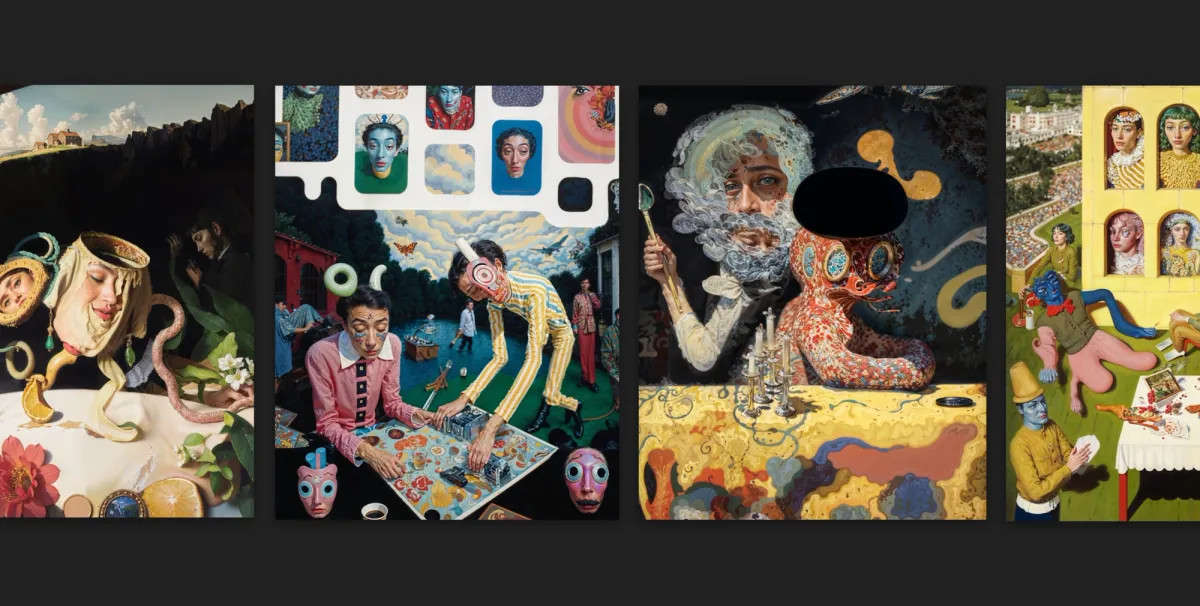
Selected works from Up & Out
On Artistry
Manifold: In 2025, how do you navigate the space today?
Infiniteyay: I’m lucky to have other income streams, so I’m not completely reliant on sales. That gives me freedom to experiment, to be authentic, to create without pressure.
When you’re desperate for sales, it can bleed into everything: your art, your messaging, your energy. But when you’re creating from a place of exploration, passion and/or joy, people notice. That’s what I aim for. Market up or down, I try to stay in the same headspace: create what excites me, and let the rest follow.
Manifold: How do you define success?
Infiniteyay: For me, success is staying in motion. It’s continuing to grow, to learn, to evolve. Success is seeing your work progress, connecting with others, and feeling good about what you put out into the world. It’s not always measured in sales or follower counts. Sometimes, it’s just knowing that you made something real.
Manifold: What do you say to people who claim NFTs or AI art isn’t real art?
Infiniteyay: Those can be two very complex conversations to have but I feel it’s often just a lack of understanding. People can be quick to form opinions without truly digging in, engaging with the work, processes, or the stories behind it all. But if you actually talk to artists in this space, hear about their journeys, their struggles, their processes and breakthroughs, you realize how powerful and real this movement really is.
NFTs gave digital artists the same kind of access and legitimacy that traditional artists have had for centuries. They opened up markets for mediums that didn’t have a marketplace before. Mediums like Video art, generative art, AI-assisted work, these were things you couldn’t easily sell or collect before. I know many people have issues with the way NFTs and AI tools are created and I think many of those concerns can be addressed and improved upon over time. However I think we should be celebrating that artists all over the world have new ways to create, share, and sell their creations in a thriving new art market. A market that is excited about art and creative explorations unlike ever before.
But yes, of course real art can be created with AI and turned into an NFT. AI is a tool, just like a brush or a camera. NFTs are simply a way to store and sell your art. Art is much more than the tools used to create it or how it’s sold.
Manifold: What would you tell someone new to web3 and NFTs?
Infiniteyay: Just start. Dive in and accept that it’ll be a little confusing at first. There are new terms, new tools, and a new culture to learn. But you don’t have to figure it all out in one day. The best way to learn is by doing. Follow artists, creators, builders. Explore platforms, art collections, and creative tools. Just start trying things and you’ll figure it out along the way and find what you resonate with.
There are amazing resources, platforms like Manifold, and people who genuinely want to help. Everyone who’s built something here started in the exact same place: zero. So don’t be afraid to ask questions, experiment, make mistakes, and grow. That’s how you’ll find your place here.

Interested in creating your own Catalogue? Sign up.